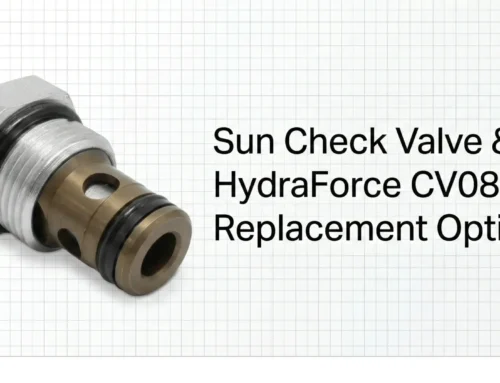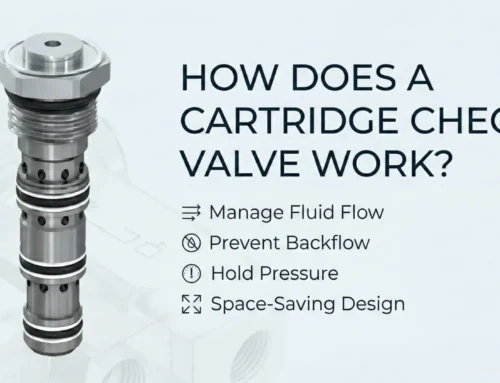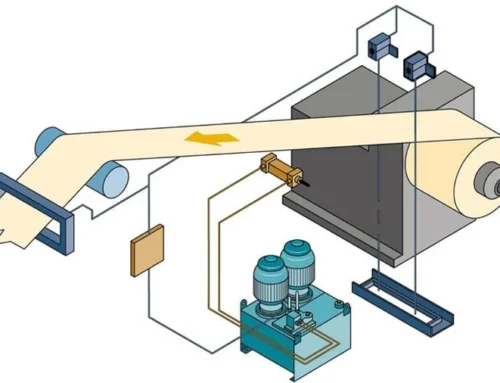
Regulating the precise amount of hydraulic oil supplied to various components is a fundamental necessity for maintaining the integrity of a hydraulic system. A high performance flow control cartridge performs this role by managing the volume of fluid directed toward actuators or motors. These components are versatile in design, appearing as pressure-compensated or non-compensated units. They can be configured as 2-position, metering, or proportional valves with direct-acting, piloted, or manual operation. At Jade Crown, we offer precision flow control components designed for high-pressure industrial environments. Understanding these variations is the first step toward optimizing system performance through strategic hardware selection.
Why is identifying system operating parameters the first priority?
Matching the hardware to specific system requirements involves a rigorous analysis of maximum flow rate, operating pressure, and fluid compatibility. The cartridge flow control valve must be capable of handling the peak system flow without inducing an excessive pressure drop. A valve that is too small inherently creates inefficiency and localized heating. Engineers must verify that the maximum pressure rating of the valve exceeds the system peak pressure. It is equally vital to ensure that the seals and internal materials are fully compatible with the specific hydraulic fluid viscosity. Identifying these limits early prevents premature component failure and energy waste.
Functional Requirements: Needle vs. Compensated Logic
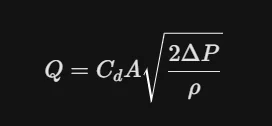
Variable Definitions:
-
$Q$: Flow rate (LPM or GPM)
-
$C_d$: Discharge coefficient (dimensionless)
-
$A$: Orifice area
-
$Delta P$: Pressure drop across the valve
-
$rho$: Fluid density
The decision between a simple throttle and a pressure-compensated unit defines the precision of the entire circuit. A simple needle valve is suitable when load pressure remains constant and precise speed control is secondary. These units adjust flow simply by altering the orifice area, governed by the following relationship:
However, a flow regulator cartridge with pressure compensation is essential for maintaining a constant flow rate regardless of load pressure fluctuations. This ensures stable actuator speeds in applications with varying loads. Jade Crown delivers spool and poppet style cartridge valves for flow ranges from 0 to 189 lpm (0 to 50 gpm) and operating pressures from 207 to 350 bar (3000 to 5075 psi).
Selecting Physical Characteristics and Adjustment Types
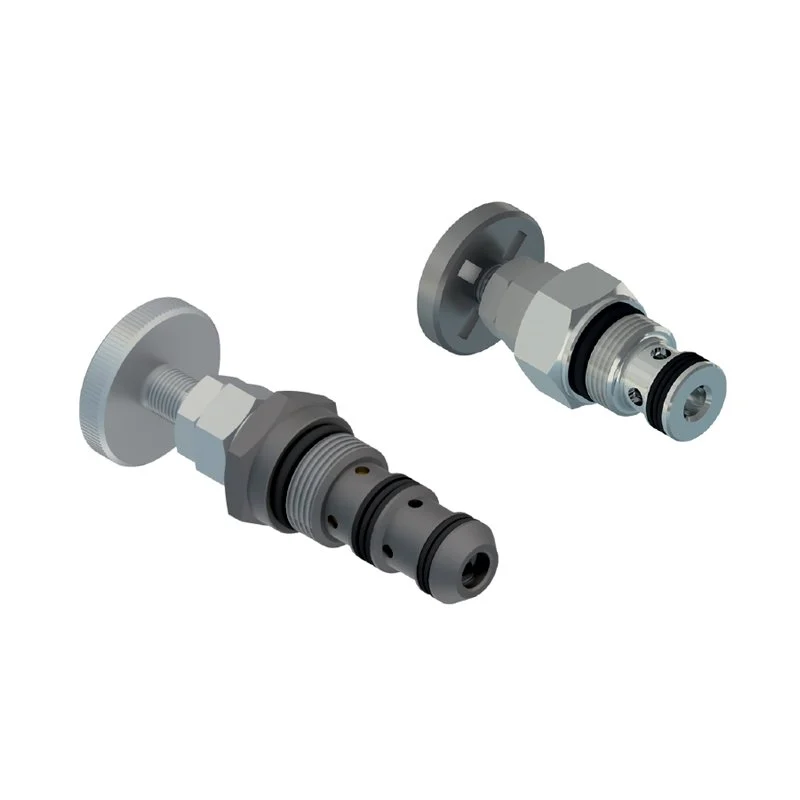
Physical integration requires that the selected components fit specific cavity standards such as SAE or ISO within the manifold block. Aligning the cavity size with the required flow capacity often involves standardized formats like T-10A, T-13A, or T-16A. Beyond sizing, the adjustment mechanism should be chosen based on the frequency of required changes. Our expert production capabilities ensure that every adjustment option, including aluminum knobs, positive shut-offs, and linear adjusters, meets rigorous industrial standards. Options range from internal hex screws for set-and-forget applications to hand-adjust knobs for frequent operational tuning.
Evaluating Performance Metrics and Energy Efficiency
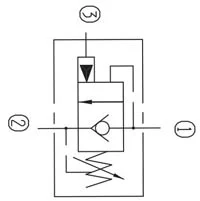
A lower pressure drop when the valve is fully open is a direct indicator of reduced energy loss within the system. When utilizing a pressure-compensated flow regulator cartridge, ensure the compensation range handles the minimum required pressure drop, which typically sits between 7 to 10 bar (100 to 150 psi). High-performance systems also consider leakage. Determine if the application requires zero-leakage in the closed position, noting that needle valves usually have minor leakage. Decisions should also include whether a built-in check valve is necessary for reverse free flow to protect upstream components.
Direct Manufacturing Advantage: Scaling with Reliability
Selecting a component is a technical decision, yet selecting a partner is a strategic one. As a dedicated manufacturer and supplier, Jade Crown provides a direct bridge between engineering excellence and supply chain stability. We offer comprehensive bulk and wholesale purchase support to ensure that your production lines remain operational without the risk of unexpected shortages. By maintaining complete control over the fabrication process, we deliver a consistent combination of stable quality and a significant price advantage. Choosing Jade Crown means partnering with a production factory that guarantees stable supply for high volume industrial requirements. You can request a customized quote for bulk procurement to leverage our factory-direct pricing.
Featured Jade Crown Product Series
| Function Choice | Model Choice | Max.Pressure | Flow Ranges | Max.flow |
|---|---|---|---|---|
|
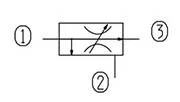
BBLF06-00-00 (596 downloads) | 210bar | 1.4~18L/min | 18L/min |
| BBLF06-02-00 (565 downloads) | 2~4L/min | 12L/min | ||
| BBLF08-00 (559 downloads) | 20L/min | |||
|
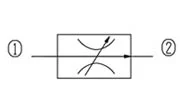
BBLF10-00 (586 downloads) | 345bar | 0.05~40L/min | 60L/min |
|
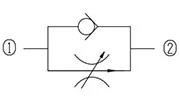
BLF04-00 (545 downloads) | 240bar | 0.3~20L/min | 20L/min |
| BLF08-00 (556 downloads) | 0.3~35L/min | 35L/min | ||
| BLF10-00 (577 downloads) | 0.3~60Lmin | 60L/min | ||
| BLF12-02 (570 downloads) | 0.3~113L/min | 113L/min | ||
|
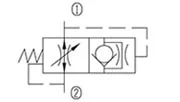
BDLF08-00 (521 downloads) | 0.3~30L/min | 30L/min | |
| BDLF10-00 (546 downloads) | 0.3~45L/min | 45L/min | ||
| BDLF12-00 (543 downloads) | 0.3~200L/min | 200L/min | ||
| BDLF12-01 (565 downloads) | 0.3~120L/min | 120L/min | ||
| BDLF16-00 (532 downloads) | 0.3~350L/min | 350L/min | ||
|
BFBF12-01/03 (574 downloads) | 210bar | 25L/min | |
| BFBF××/X.× (554 downloads) | 350bar | 25~180L/min | ||
|
BFJF10-01 (560 downloads) | 40L/min | ||
Summary Selection Checklist
Use the following checklist to ensure the selected hardware aligns with your system goals:
-
Flow Rate: Verify Max GPM/LPM against Valve Capacity.
-
Pressure: Match System PSI/Bar with Valve Rating (Up to 350 bar).
-
Type: Choose between Needle (simple) and Compensated (precise).
-
Cavity: Ensure SAE/ISO standard size compatibility (e.g., T-10A).
-
Adjustment: Select between Screw, Knob, or Tamper-proof options.
-
Flow Path: Configure for 2-port or 3-port (priority) patterns.
Contact Us
If you have specific technical questions or require professional support for your hydraulic project, our engineering team is here to help. Contact Jade Crown today to discuss your requirements or to get a specialized technical consultation.