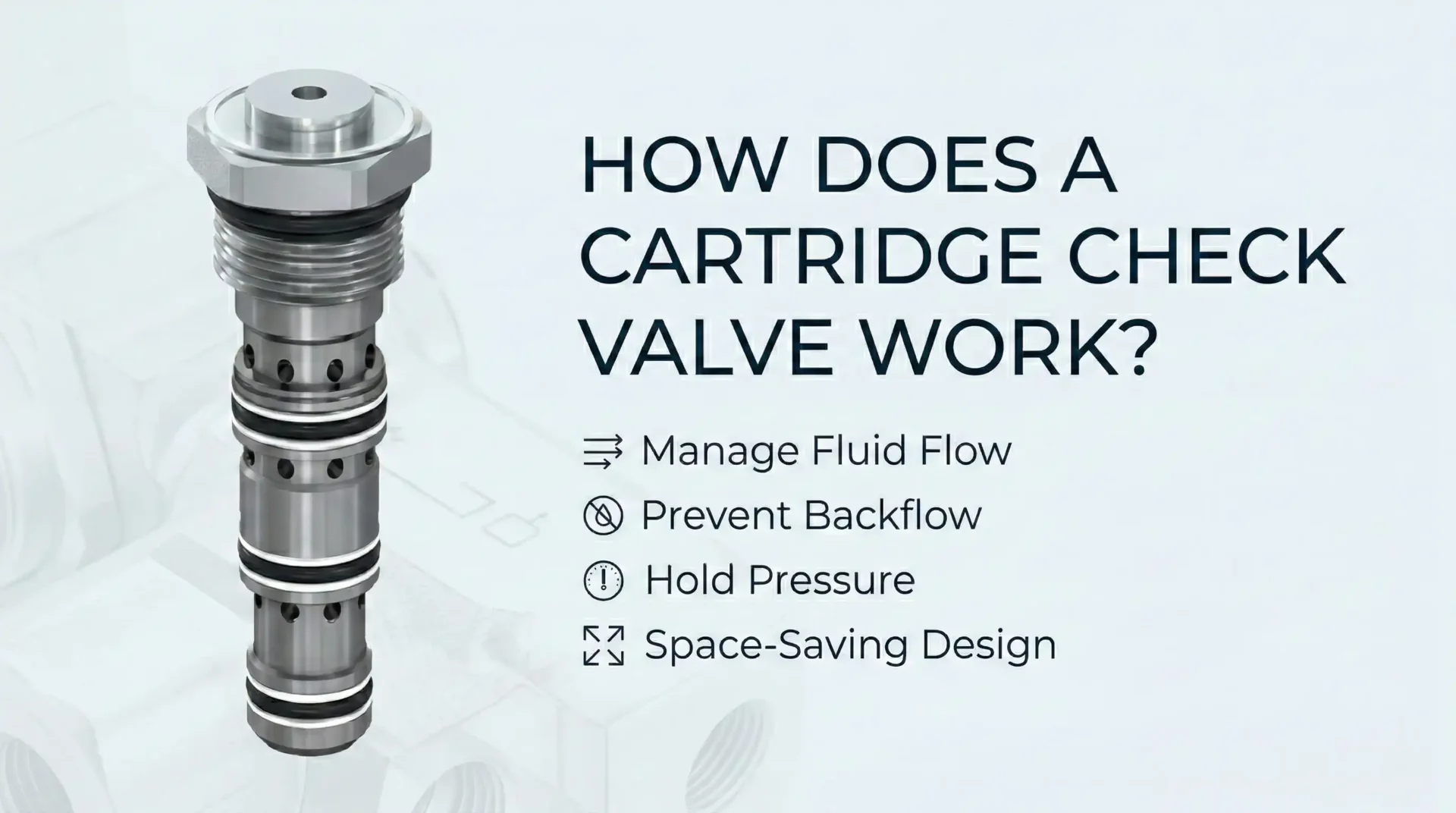
A cartridge check valve is an essential hydraulic component designed to manage fluid flow in one direction while preventing backflow. These valves are commonly used to control flow direction, hold pressure, and ensure load stability. Understanding how they work is crucial for anyone looking to optimize hydraulic systems, whether in mobile machinery or industrial applications. In this article, we’ll dive into the functionality of cartridge check valves, how they operate, and the advantages they bring to hydraulic systems. By the end of this guide, you will have a clear understanding of how these valves contribute to system efficiency and why they’re a preferred choice for many hydraulic applications.
What is a Cartridge Check Valve?
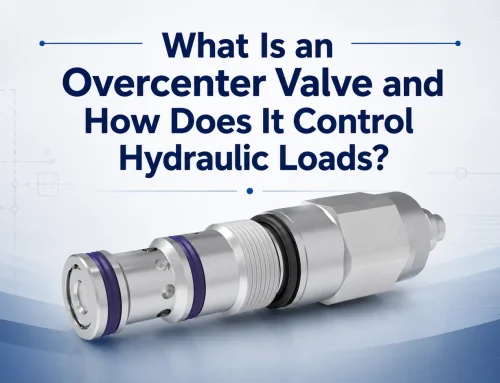
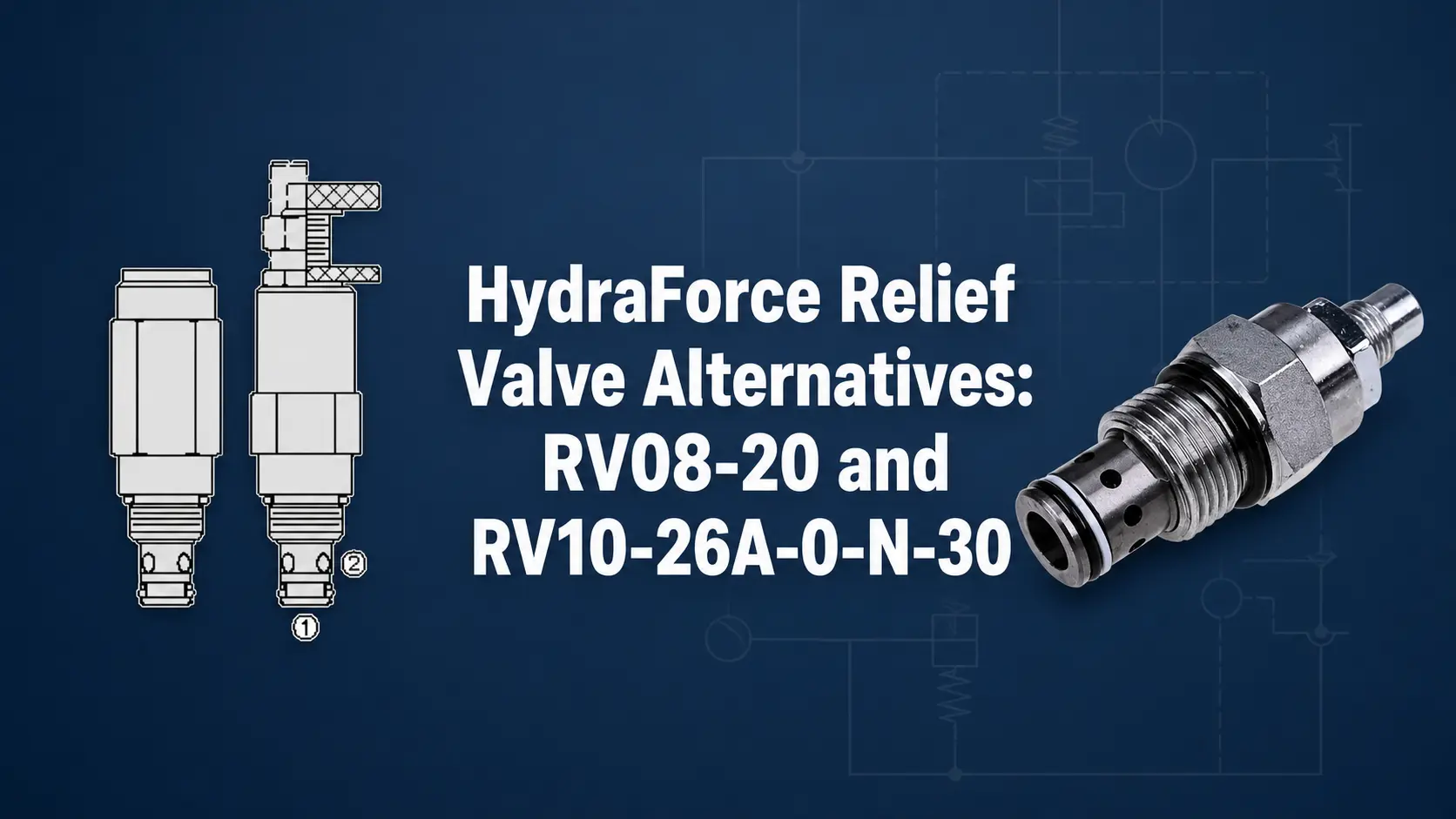
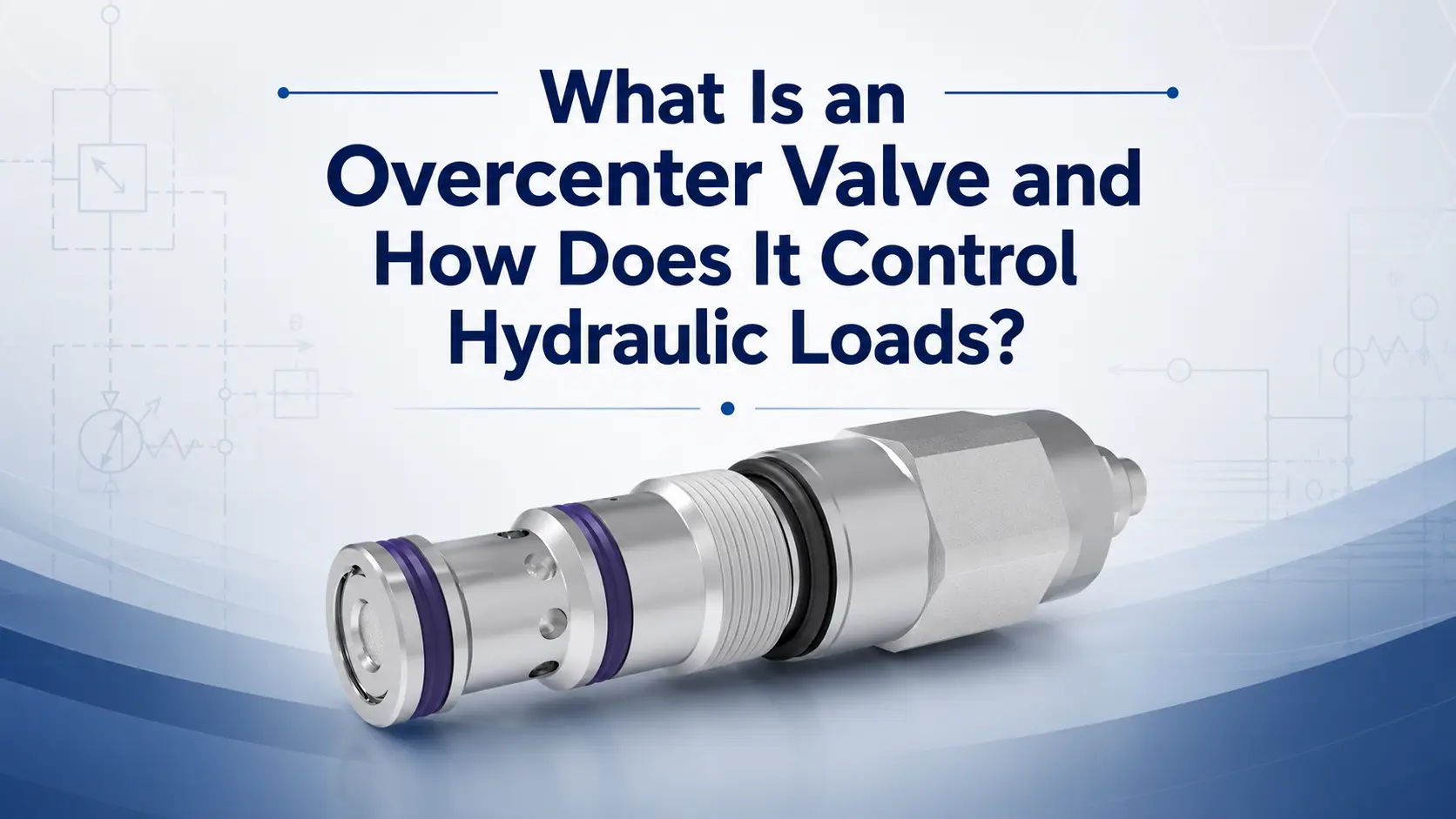
A cartridge check valve is a self-contained hydraulic valve that is typically installed directly into a manifold block or machine housing. It features a unique, screw-in design, offering several advantages, including reduced need for manifold machining and improved reliability due to fewer loose parts. Cartridge valves consist of essential components like a sleeve, plunger, spring, and orifice, which are pressed together as one unit, making them 100% tested and ensuring smooth performance without the risk of parts coming loose.
Jade Crown’s manifold cartridge valves, for instance, present an innovative, simplified alternative to traditional solenoid operators and stud mount valves. The design of these valves allows for several benefits, including:
-
Space-Saving: The compact nature of cartridge valves reduces the overall size of the hydraulic system, creating more efficient designs and freeing up space.
-
Lower Manifold Cost: Reduced manifold machining results in cost savings.
-
No Loose Parts: With all parts pressed together, these valves operate with greater reliability and efficiency.
If you’re interested in exploring more about Jade Crown’s manifold cartridge valves, you can learn more on our product page.
Key Features and Functions
-
Operation:
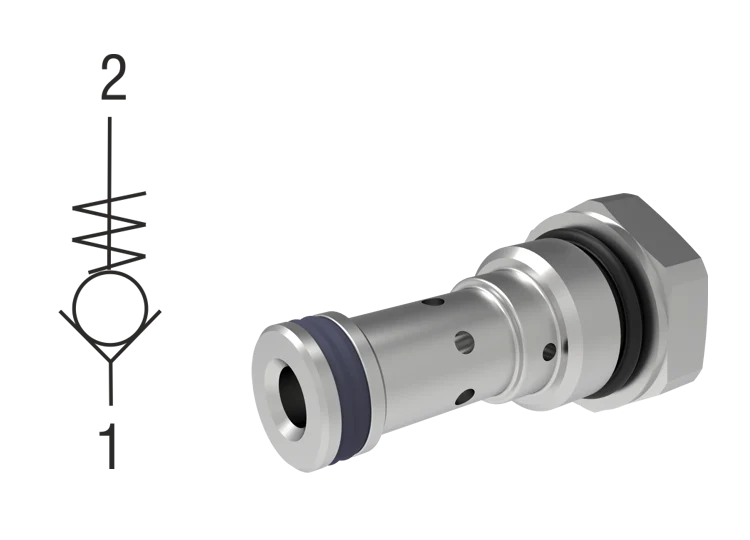
The core function of a cartridge type check valve is to prevent reverse fluid flow. It operates using a spring-biased, fully guided poppet or ball. When the fluid pressure exceeds a preset threshold (cracking pressure), the poppet moves off its seat, allowing flow in the desired direction. Once the pressure is reduced or reversed, the spring force causes the poppet to return to its seat, effectively sealing the valve and preventing backflow. This mechanism ensures that fluid only flows in the designated direction. -
Types:
Cartridge check valves come in different variants, with the two most common being:-
Direct-Acting (Standard) Check Valves: These open or close based solely on the fluid pressure, allowing flow only in one direction.
-
Pilot-to-Open Check Valves: In addition to the fluid pressure, these valves use pilot pressure to allow reverse flow when the pilot pressure is applied.
-
-
Installation:
Cartridge check valves are designed to be screwed or threaded into specific cavities within a manifold block or machine housing. This installation method ensures a reliable seal and simplifies maintenance, as the valve can be easily replaced or serviced without dismantling the entire system. -
Benefits:
-
Space Efficiency: The compact design of cartridge valves makes them ideal for creating Hydraulic Integrated Circuits (HICs), which enhance system efficiency by reducing the need for excessive space and piping.
-
High Durability: These valves are built to withstand harsh operating conditions, ensuring long-term reliability and performance in industrial applications.
-
Easy Maintenance: Since the valves are compact and self-contained, they are easy to install, replace, and maintain, making them cost-effective over the long term.
-
-
Applications:
Cartridge type check valve are widely used in various applications, including mobile and industrial equipment. Common uses include:-
Load Holding: Preventing load drift by blocking backflow when the system is at rest.
-
Pressure Relief: Protecting against overpressure by controlling the direction of fluid flow.
-
Preventing Backflow: Ensuring fluid only flows in the intended direction, crucial for maintaining system integrity and performance.
-
Advantages of Cartridge Check Valves
The primary advantage of cartridge check valves is their ability to efficiently manage fluid flow while taking up minimal space in the system. Unlike traditional valves, which may require complex designs and multiple components, cartridge check valves combine all essential parts into one self-contained unit. This simplification leads to:
-
Reduced Component Count: Fewer parts mean less risk of failure and less maintenance.
-
Cost-Effective: With simpler installation and reduced machining, cartridge valves are often more economical than their traditional counterparts.
-
Reliability: The fully tested and integrated design ensures long-lasting, dependable operation.
In conclusion, a cartridge check valve is an essential component in hydraulic systems, offering a robust solution for controlling fluid flow and preventing backflow. Its compact, cost-effective, and reliable design makes it an ideal choice for various industrial and mobile equipment applications. With continued advancements, cartridge valves like those from Jade Crown continue to offer improvements in efficiency, space management, and cost savings, making them a popular choice in modern hydraulic systems. If you need further assistance or have any inquiries, please don’t hesitate to contact us. We are happy to help you with all your needs.