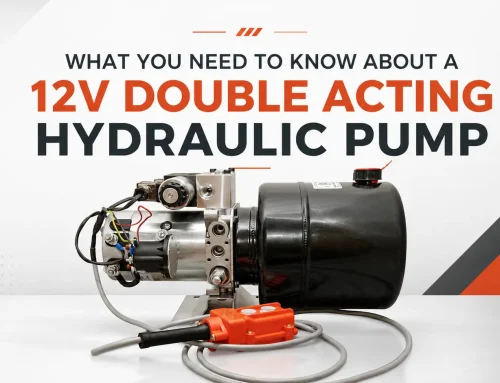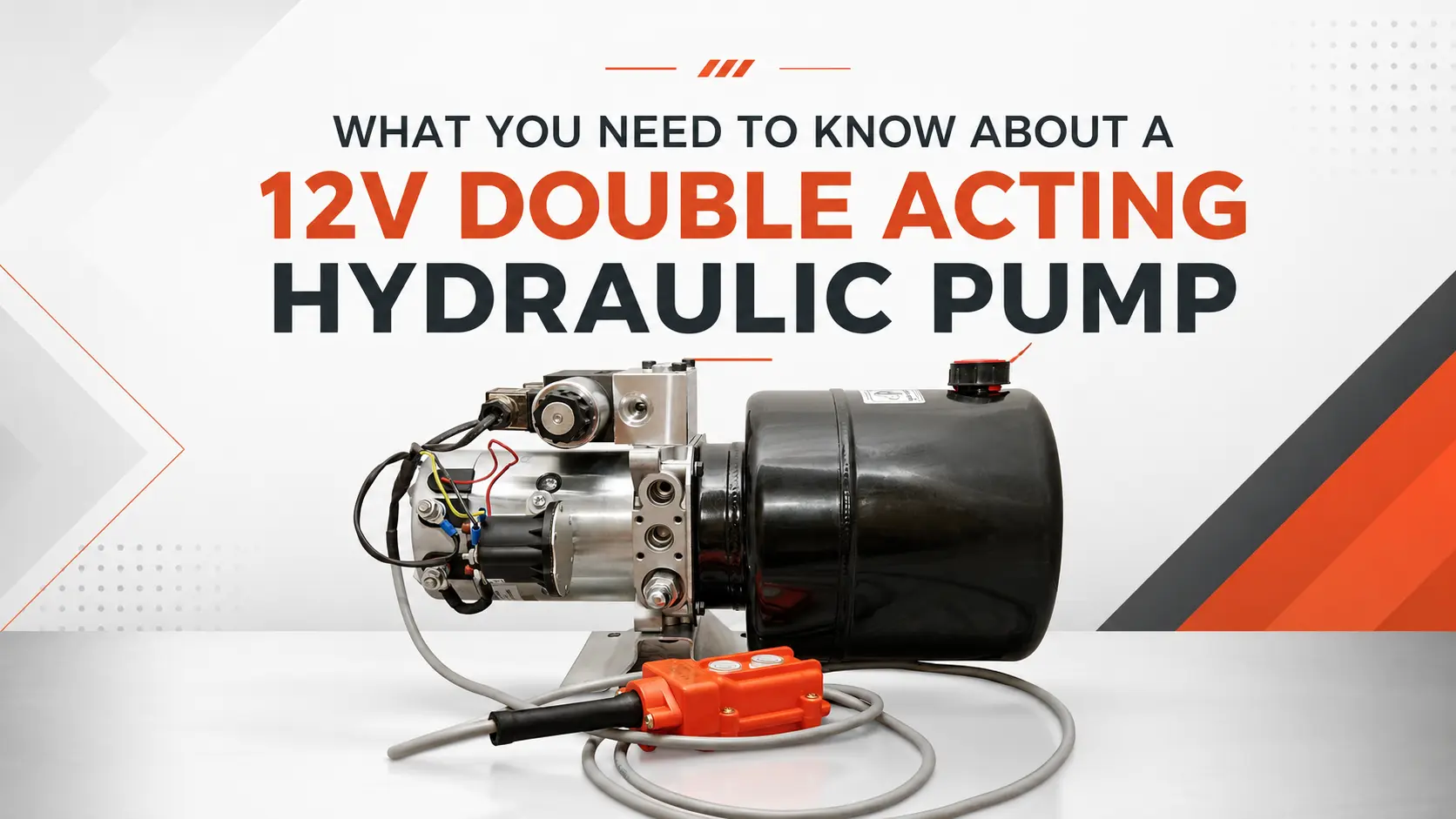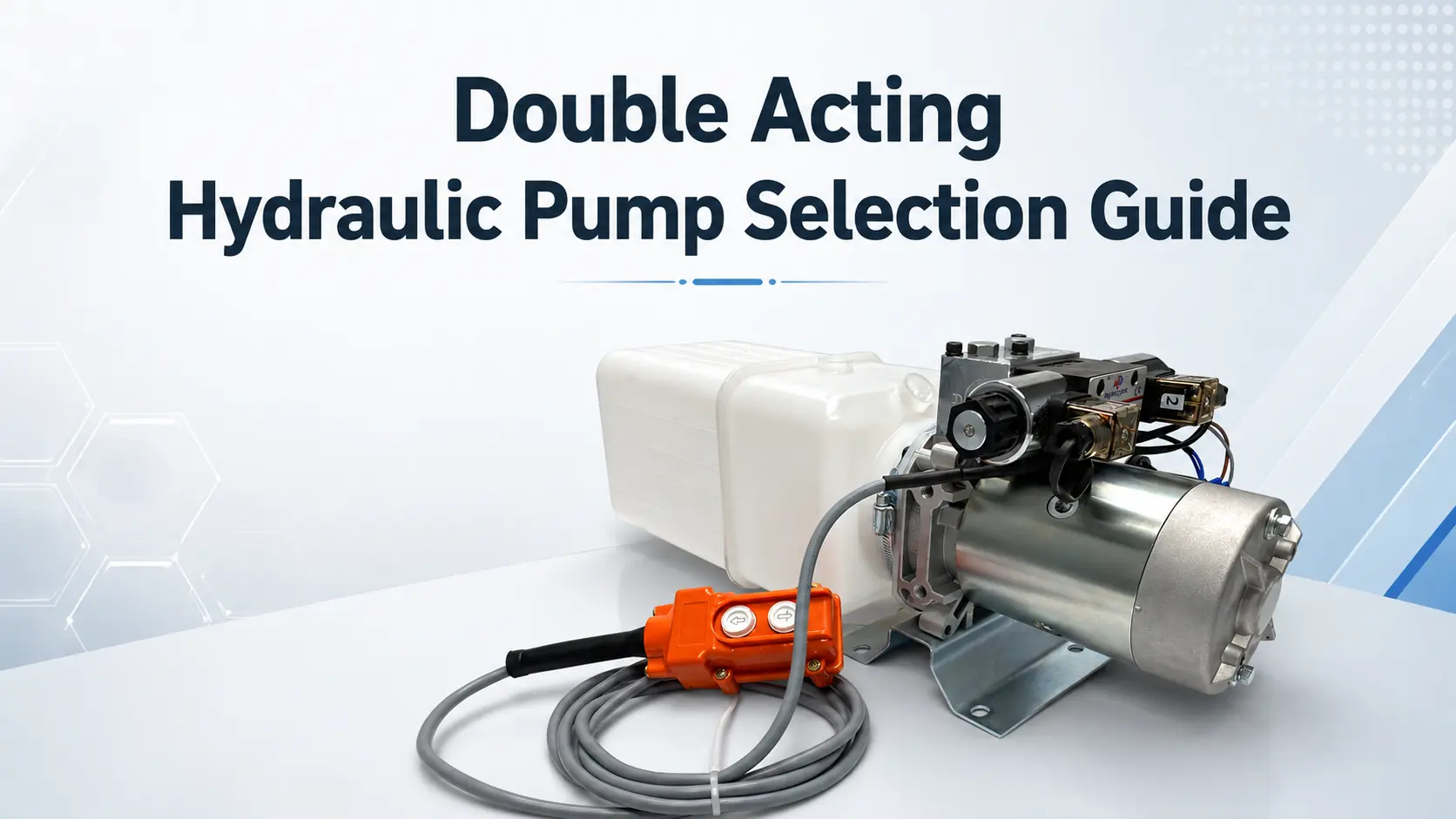
A double acting hydraulic pump should be selected by matching the power supply, working pressure, flow rate, reservoir capacity, valve circuit, ports, and duty cycle to the equipment. The correct configuration delivers hydraulic power in both directions, allowing a double-acting cylinder to extend and retract under controlled pressure.
When Should You Use a Double Acting Hydraulic Power Unit?
A double acting hydraulic power unit is used when a cylinder must be powered in both directions. It is suitable for controlled lifting and lowering, hydraulic opening and closing, bidirectional pushing or pulling, and applications that cannot rely on gravity or a spring for the return stroke.
These units are commonly installed on tippers, tilt trailers, liftgates, snow plows, agricultural attachments, and material-handling equipment; for a proven mobile-equipment configuration, you can view our double acting hydraulic power unit for tipper applications and compare it with your operating requirements.
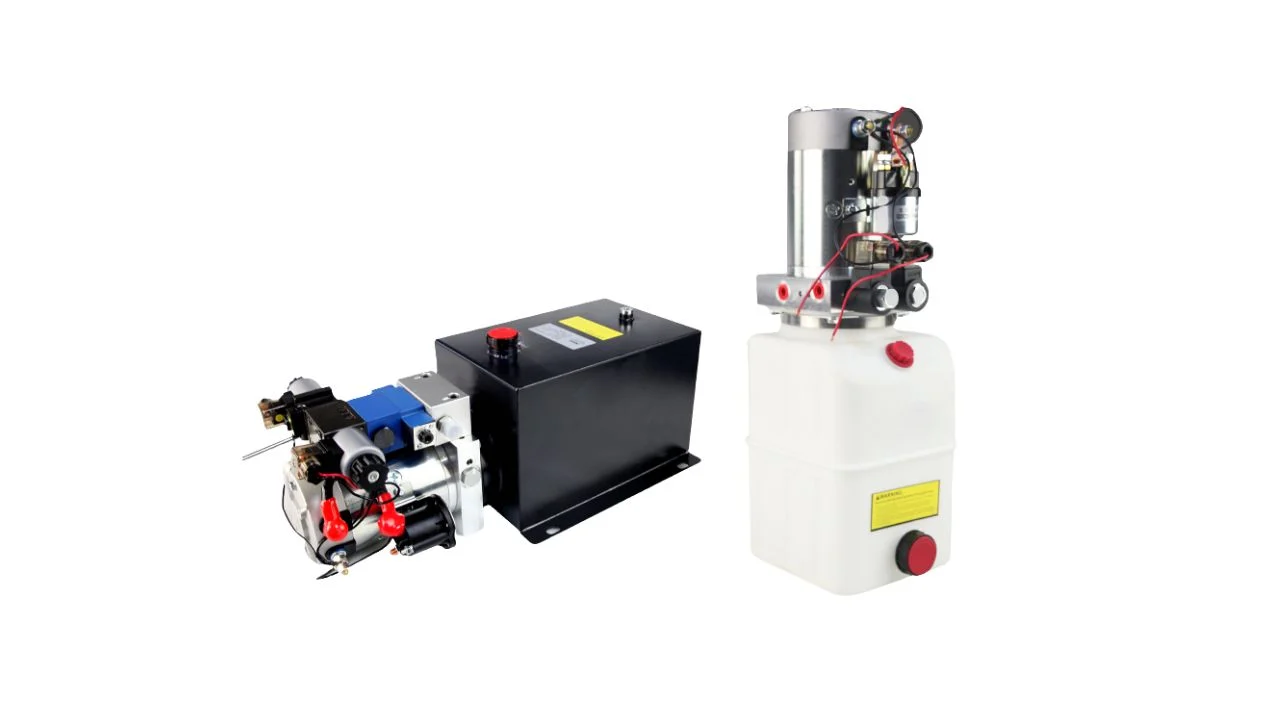
What Is the Difference Between Single-Acting and Double-Acting Power Units?
A single-acting power unit supplies pressure in one direction and relies on gravity, a spring, or an external load for the return stroke. A double acting hydraulic pump uses an A/B circuit to power both cylinder extension and retraction.
| Operating requirement | Single acting | Double acting |
|---|---|---|
| Powered movement | One direction | Both directions |
| Return method | Gravity, spring, or external load | Hydraulic pressure |
| Working ports | Usually one | A and B |
| Typical use | Power up, gravity down | Power up, power down |
How Do You Choose the Right Double Acting Hydraulic Pump?
Only the core operating and installation parameters are required to identify a suitable unit.
| Core parameter | What to confirm |
|---|---|
| Power supply | 12V DC, 24V DC, or AC |
| Pressure and flow | Required force and movement speed |
| Reservoir | Capacity, material, and mounting position |
| Circuit and ports | Cylinder quantity, valve functions, and A/B connections |
| Duty and control | Operating frequency and control method |
Pressure affects the available cylinder force, while flow affects movement speed. These specifications must be considered together with the motor, reservoir, valve circuit, and equipment layout. If some details are unavailable, send the application, voltage, pressure, flow, reservoir, port, and quantity requirements to our technical team for a matched recommendation.
Do You Need a Standard or Custom Hydraulic Power Unit?
A standard replacement is suitable when the existing model, voltage, ports, reservoir, and mounting dimensions are known.
A custom double acting hydraulic power unit is more suitable for new equipment or applications requiring a special manifold, valve circuit, reservoir, control method, or installation layout. Jade Crown supports both replacement matching and application-specific OEM configurations.
What Applications Use a Double Acting Hydraulic Pump?
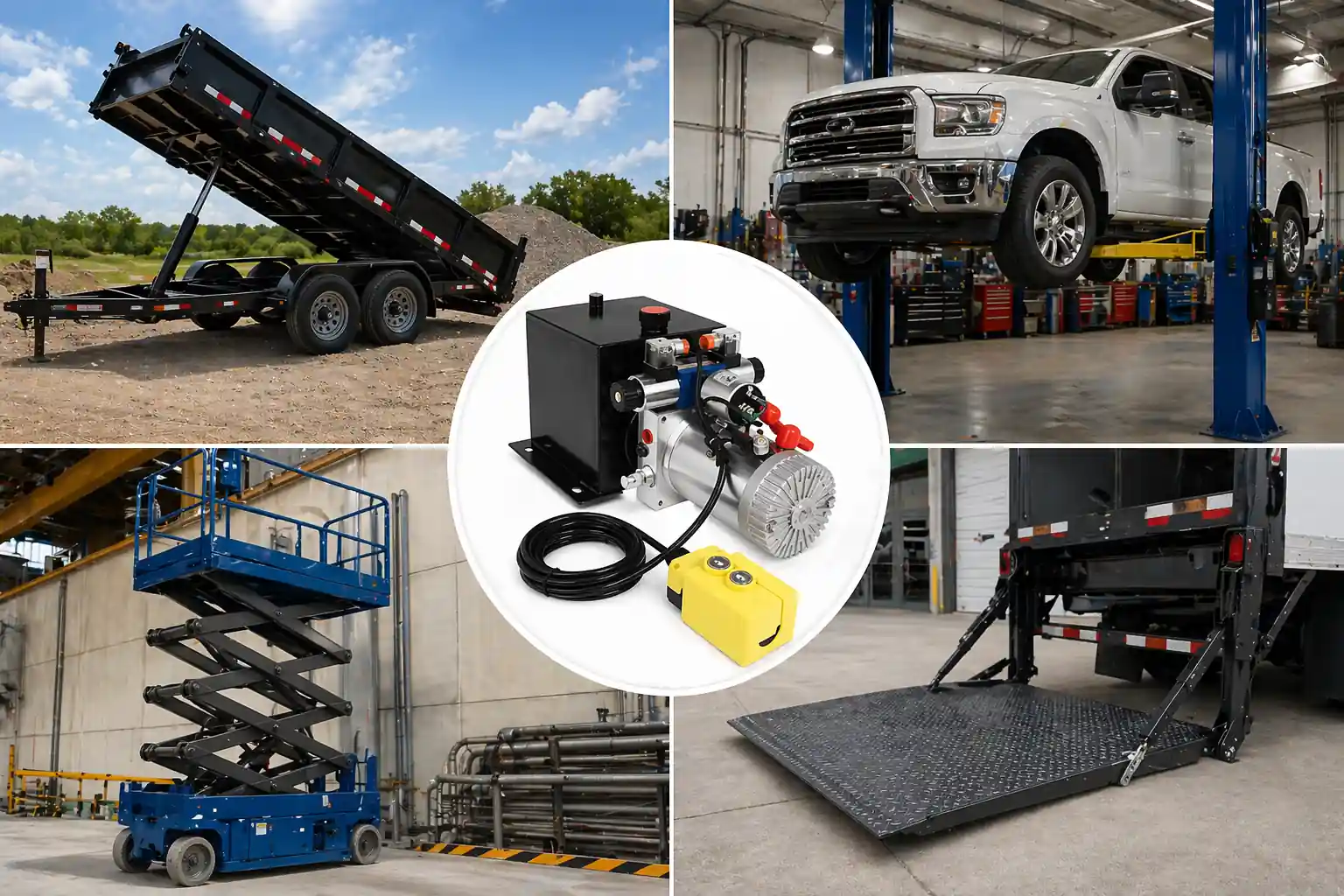
A double acting hydraulic pump is suitable for equipment that requires powered and repeatable movement in both directions. Common applications include:
- 1
Tippers and tilt trailers requiring powered lifting and lowering
- 2
Liftgates requiring lifting, lowering, opening, and closing
- 3
Snow plows requiring lift, lower, and blade-angle control
- 4
Agricultural attachments requiring bidirectional cylinder movement
- 5
Material-handling equipment requiring frequent extension and retraction
A standard unit normally controls one double-acting cylinder. Equipment with multiple cylinders or functions may require additional solenoid valves, a customized manifold, and a different controller.
Should You Choose a 12V or 24V Unit?
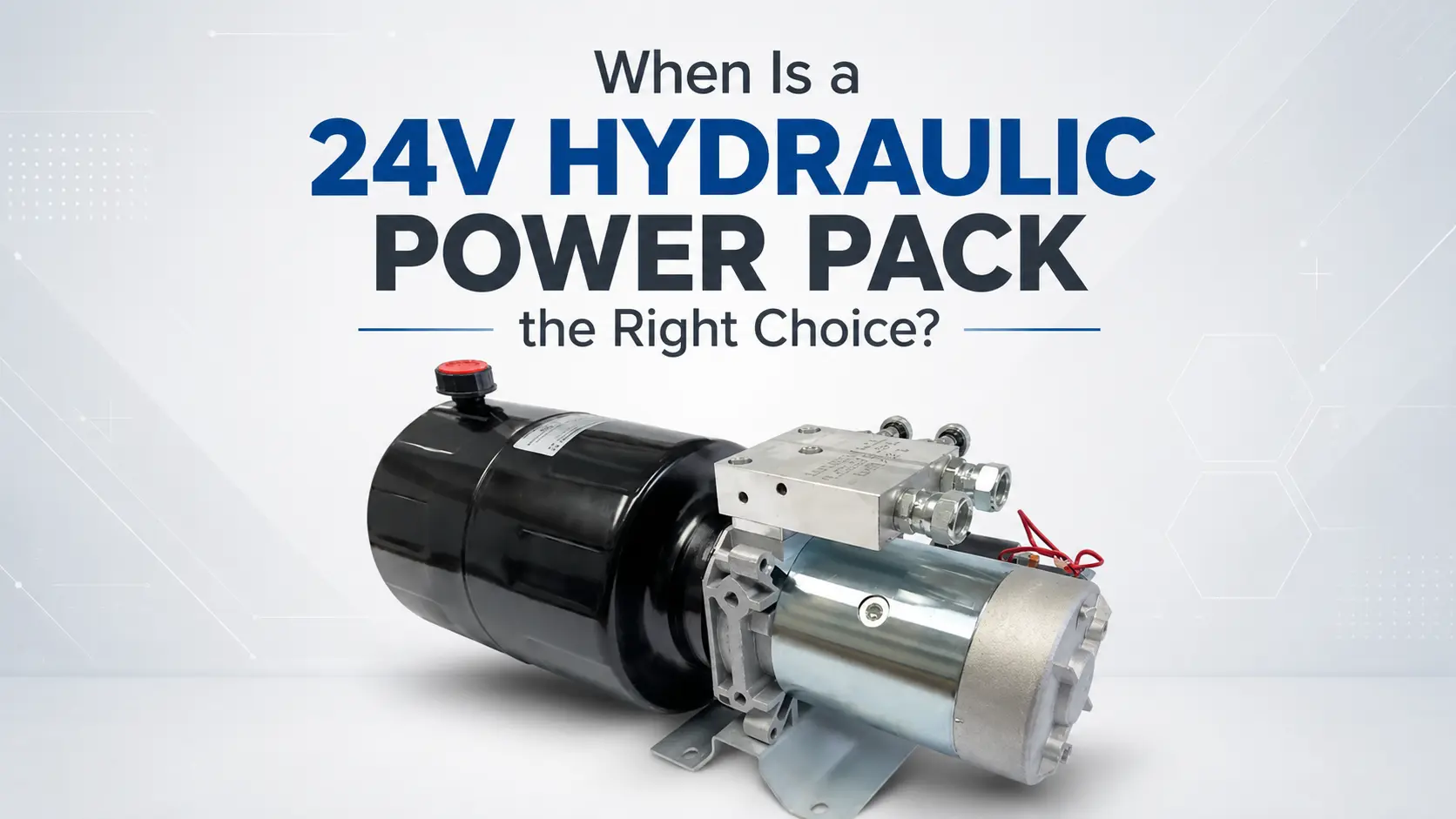
The voltage must match the equipment’s electrical system. A 12V dual action hydraulic pump is commonly used on trailers and light mobile equipment, while a 24V unit is often used on trucks, liftgates, agricultural machinery, and heavier mobile equipment.
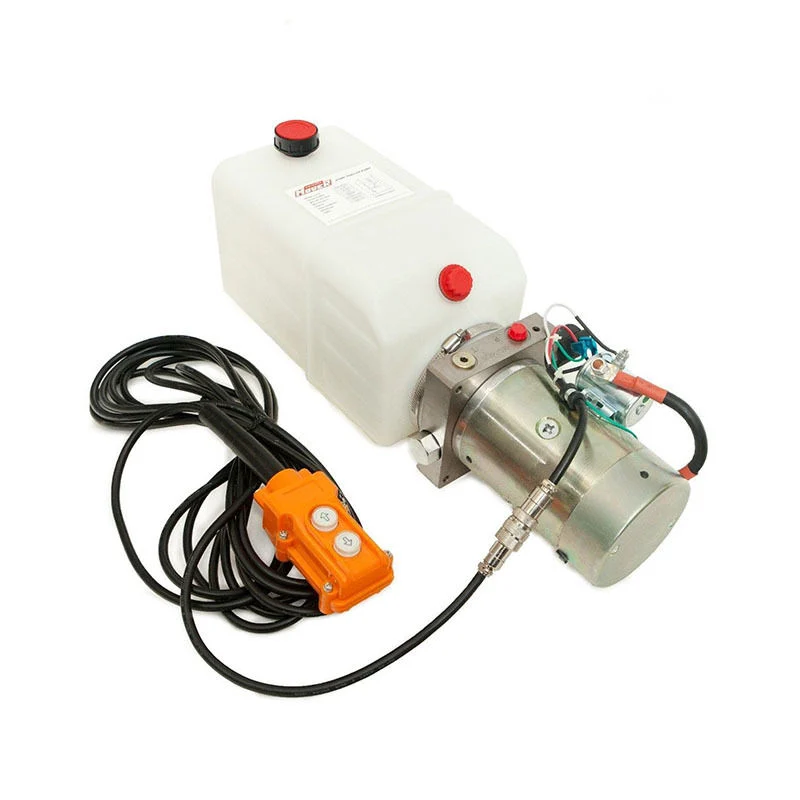
The motor, solenoid coils, controller, wiring, battery, and charging system must all use the correct voltage. Motor power and duty cycle should also match the operating frequency.
What Problems Can an Incorrectly Matched Power Unit Cause?
An incorrectly matched power unit may cause:
- 1
Slow or excessively fast cylinder movement
- 2
Insufficient force under load
- 3
Motor overheating
- 4
Operation in only one direction
- 5
Cylinder drift or unstable movement
- 6
Reservoir overflow or insufficient oil supply
These problems may also be caused by low voltage, incorrect wiring, contaminated oil, blocked valves, damaged hoses, or cylinder leakage. The original fault should be identified before the complete power unit is replaced. If you encounter any of these issues, visit our dump trailer hydraulic pump repair guide for further troubleshooting information.
Why Choose Jade Crown as Your Hydraulic Power Unit Manufacturer?
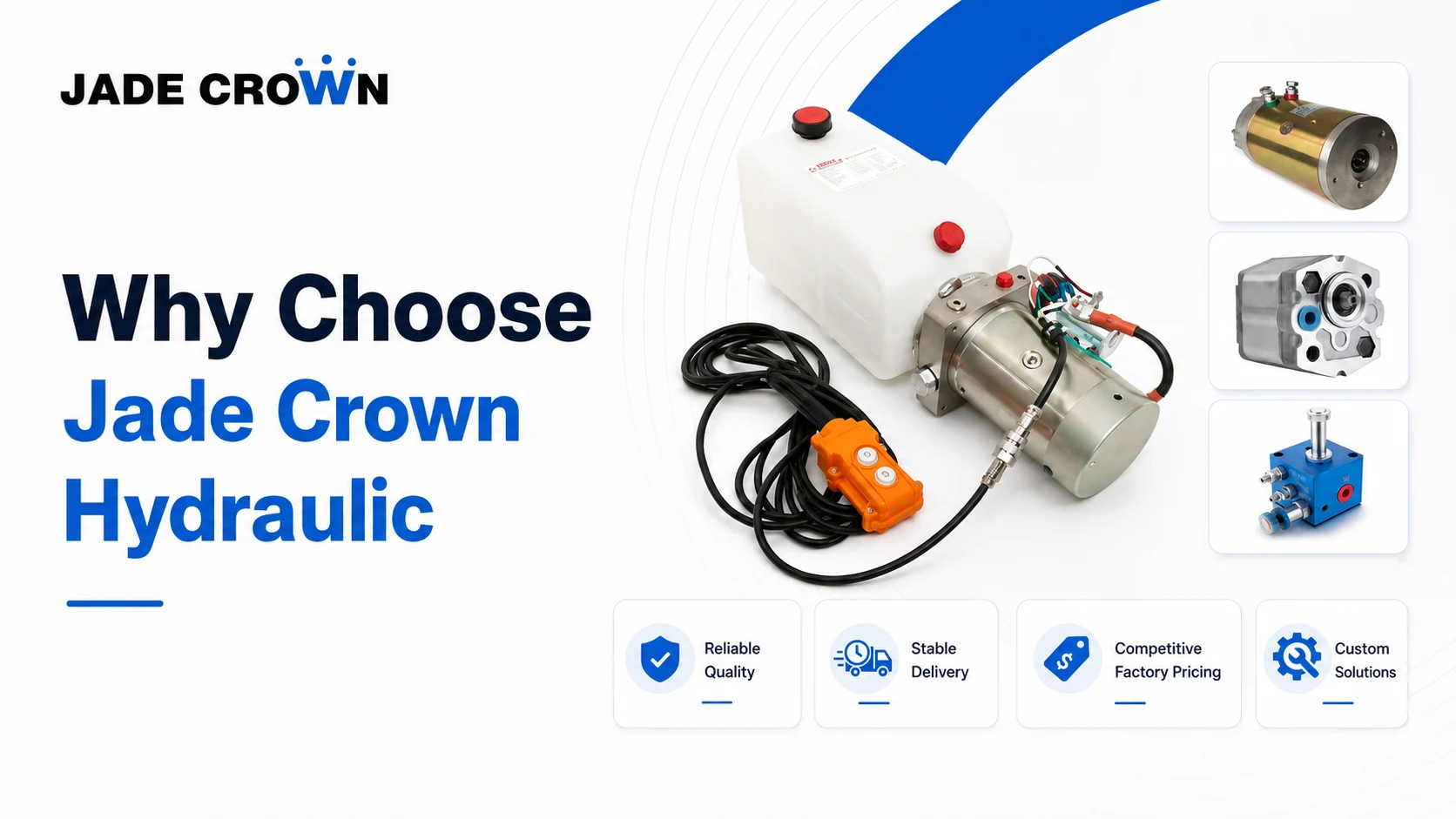
Jade Crown is a professional manufacturer of hydraulic power units, manifold blocks, cartridge valves, and related hydraulic components.
- 1
Standard and customized OEM solutions
- 2
Competitive factory-direct pricing
- 3
Responsive production and fast delivery coordination
- 4
100% functional inspection before shipment
- 5
One-year warranty and international order support
Every completed unit is checked for motor operation, hydraulic output, valve response, and external leakage before shipment. Whether you need a standard replacement or a custom OEM configuration, request a quotation from Jade Crown’s professional hydraulic power unit team with your specifications, photos, or drawing.
Frequently Asked Questions
What information is needed for a double acting hydraulic pump quote?
The main information includes voltage, pressure, flow, reservoir capacity, A/B port size, application, control method, and order quantity. A model number, nameplate photo, or hydraulic drawing can also help with matching.
Should I choose a 12V or 24V double acting hydraulic power unit?
Choose the voltage that matches the equipment. The motor, solenoid coils, controller, wiring, and battery system must use the same voltage.
Can a single-acting unit be replaced with a double-acting unit?
It is not a direct replacement. The cylinder, circuit, hoses, valves, ports, and controls must all be compatible with double-acting operation.
Can the pressure, flow, reservoir, and ports be customized?
Yes. These specifications can be configured according to the application, installation requirements, and order quantity.
Why does a dual action hydraulic pump work in only one direction?
Common causes include incorrect A/B connections, faulty wiring, a damaged solenoid coil, a blocked directional valve, low oil, or an incorrect control signal.