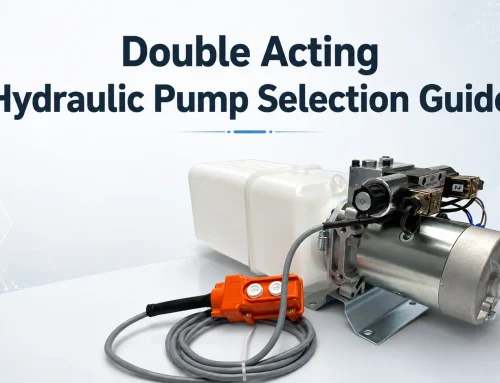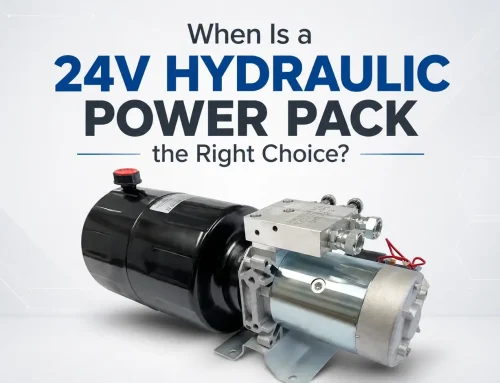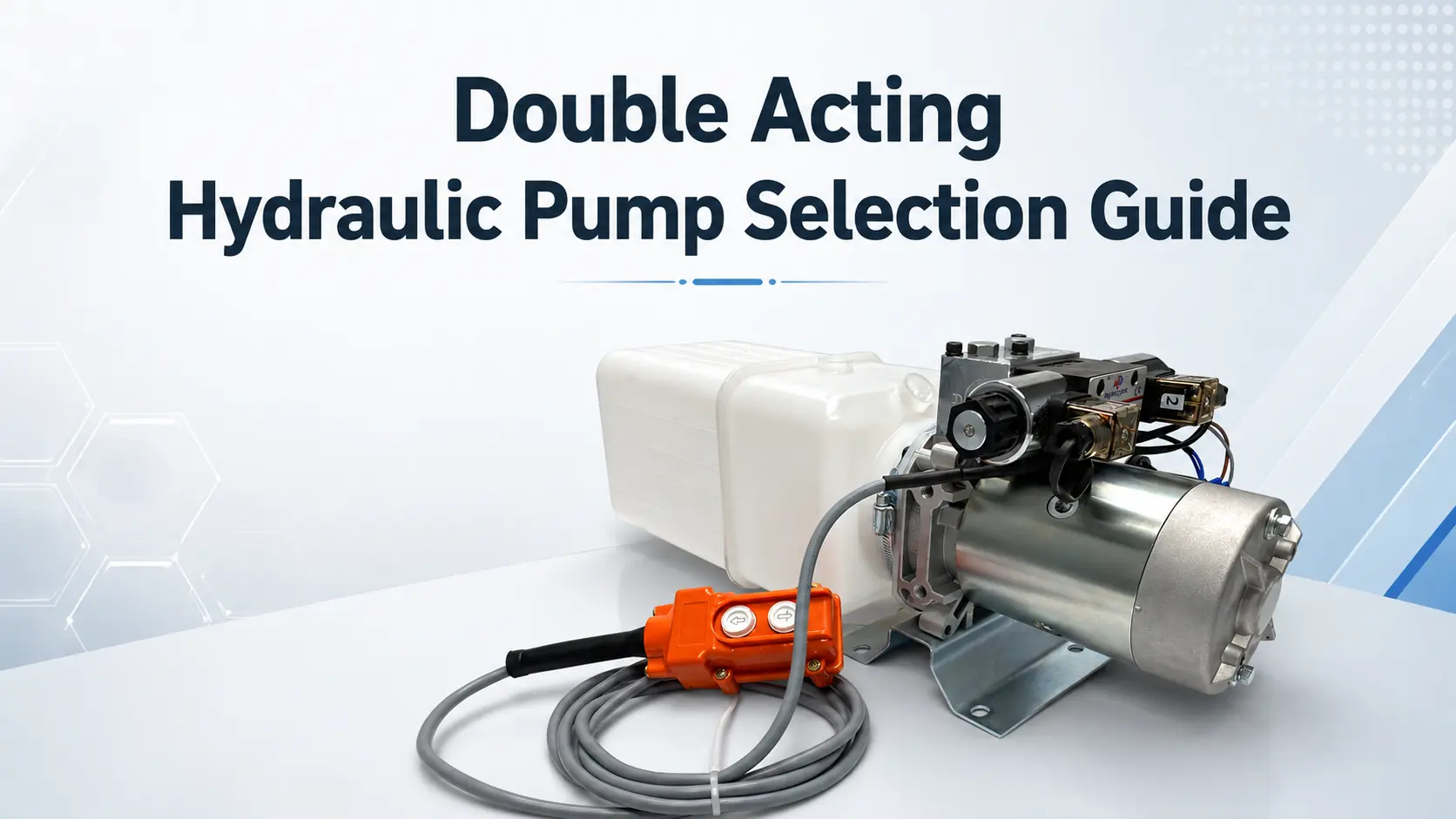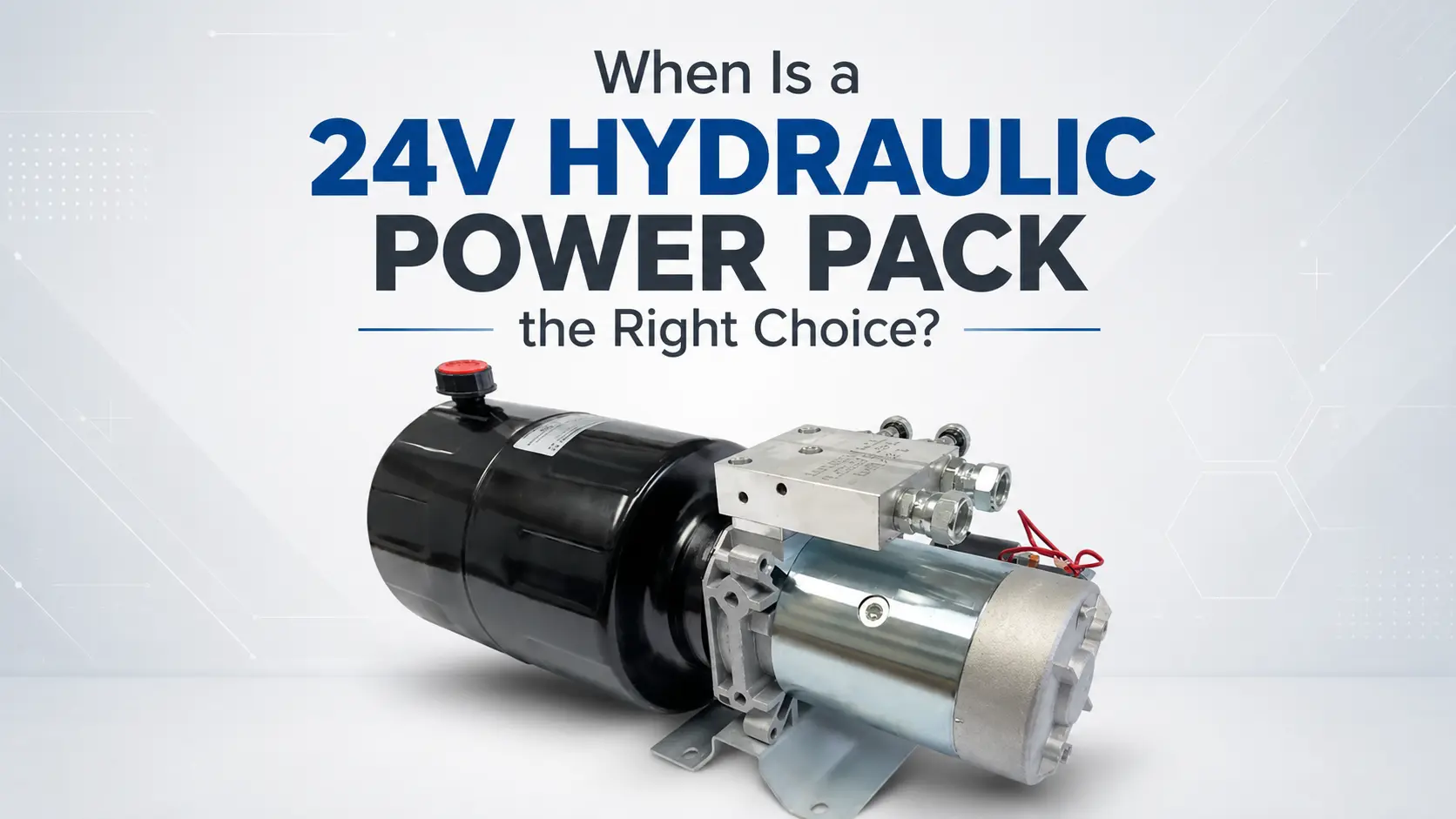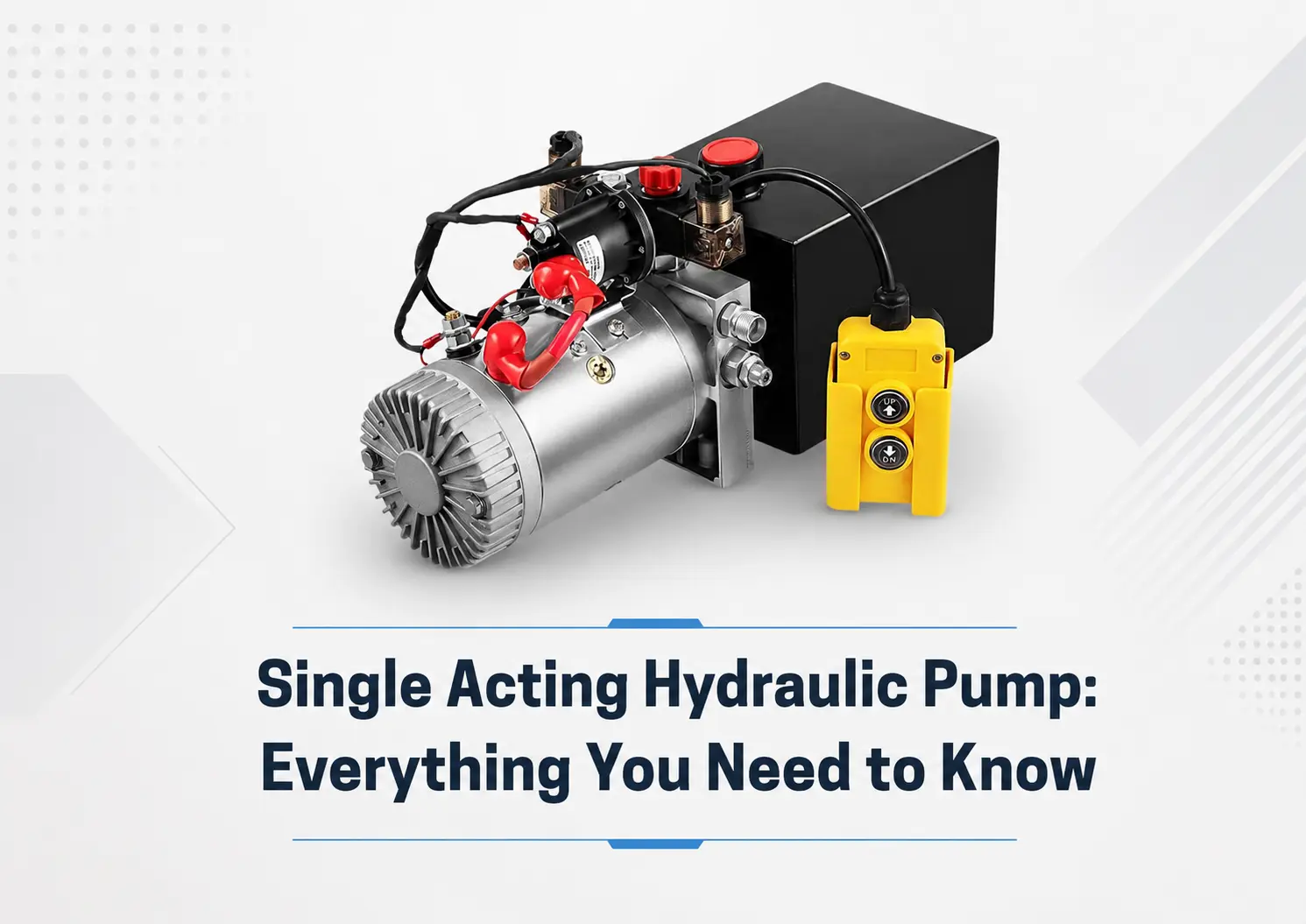
A single acting hydraulic pump is a hydraulic power unit that supplies pressurized oil to move a cylinder in one direction. The cylinder returns by gravity, a spring, or another external force, so this arrangement is often called power-up, gravity-down.
From a technical standpoint, the term ‘single acting’ describes the cylinder and circuit rather than the pump alone.
When Is a Single Acting Pump the Right Choice?
A single acting pump is suitable when equipment needs powered lifting, pushing, or extension in one direction and has a reliable return force. It works best in power-up, gravity-down applications, where the load can return safely without pump-driven retraction.
- 1Dump trailers and tipping bodies
- 2Lift tables and liftgates
- 3Tilt equipment
- 4Selected material-handling equipment
The return condition must be checked as carefully as the lifting requirement. Confirm that gravity, spring force, or the external load can return the cylinder consistently and at a controlled speed. If the machine needs powered retraction, bidirectional load control, or precise positioning, a double-acting system is usually more suitable.
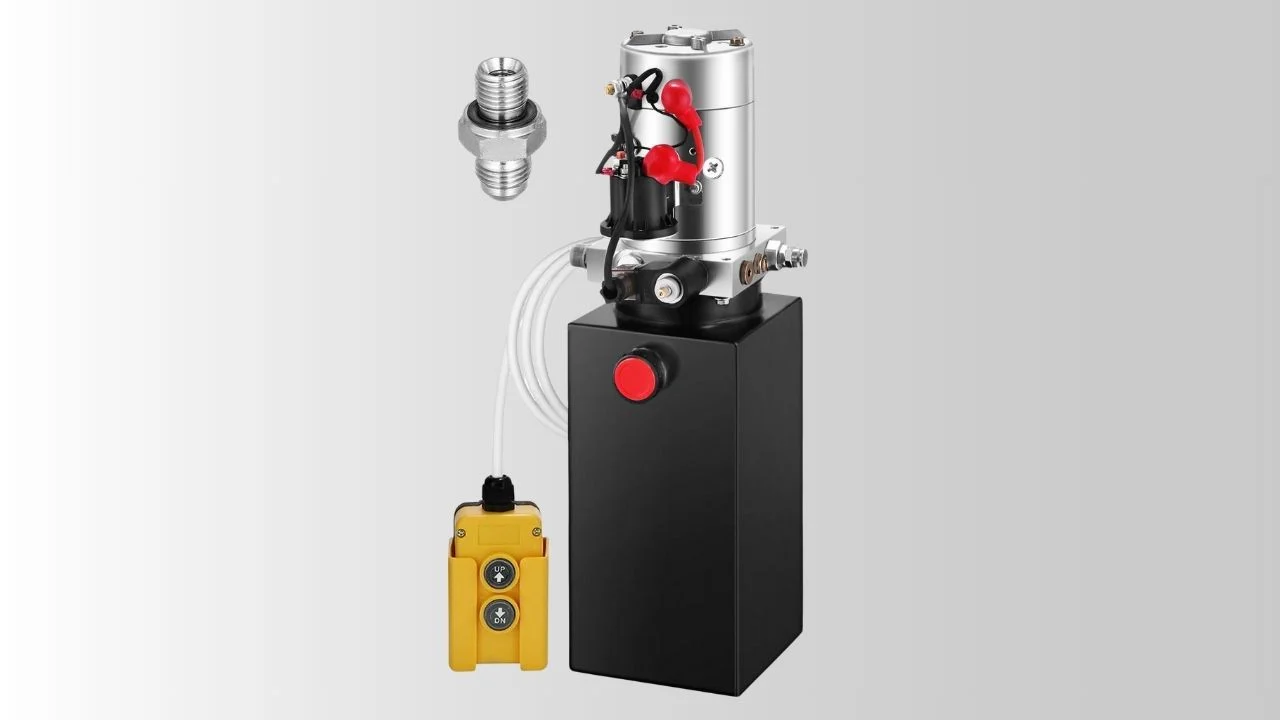
How Does a Single Acting Hydraulic Pump Work?
When an up command is given, the motor drives the pump to draw oil from the reservoir and send pressurized oil through the valve block to the cylinder. The cylinder extends to lift or push the load. In some circuits, a check valve prevents reverse flow when the motor stops; the required load-holding and safety components must be selected for the application.
To lower or retract, the release valve opens and allows oil to return to the reservoir. Gravity, a spring, or another external force then returns the cylinder. Where lowering speed matters, the return circuit should be designed with the appropriate flow-control and safety components.
What Should Be Confirmed Before Ordering?
Three factors should be confirmed before selecting a single acting hydraulic pump:
- 1Load and cylinder data: required force, cylinder bore, and stroke.
- 2Pressure and flow: working pressure and required extension speed.
- 3Power and installation: DC or AC supply, voltage, available mounting space, and port location.
These details provide the basis for a suitable configuration. For help with tank capacity, valve logic, controls, duty cycle, or special installation conditions, contact our professional team for support and send us your application information for a professional recommendation.
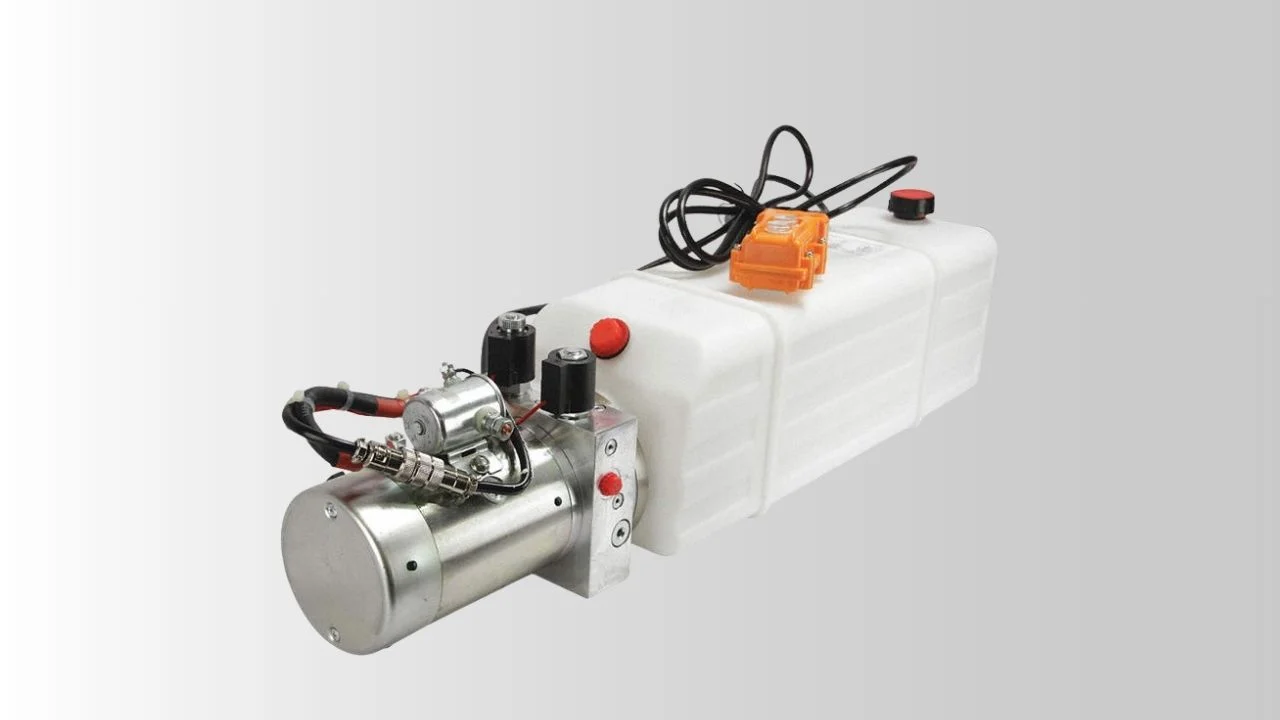
Single Acting vs. Double Acting Hydraulic Systems
| Decision point | Single-acting hydraulic system | Double-acting hydraulic system |
|---|---|---|
| Powered movement | One direction | Extension and retraction |
| Return movement | Gravity, spring, or another external force | Hydraulic pressure |
| Circuit design | Typically simpler | More valves, plumbing, and control logic |
| Suitable applications | Power-up, gravity-down lifting or pushing | Controlled push/pull movement and bidirectional positioning |
| Main selection question | Is the external return force reliable and safe? | Is powered control needed in both directions? |
A single acting pump is often preferred when the machine has a reliable return path and a compact hydraulic layout is important. A double-acting solution is more appropriate when the equipment must retract under hydraulic power or control movement in both directions.
Why Choose Jade Crown Hydraulic for Single Acting Hydraulic Pumps?
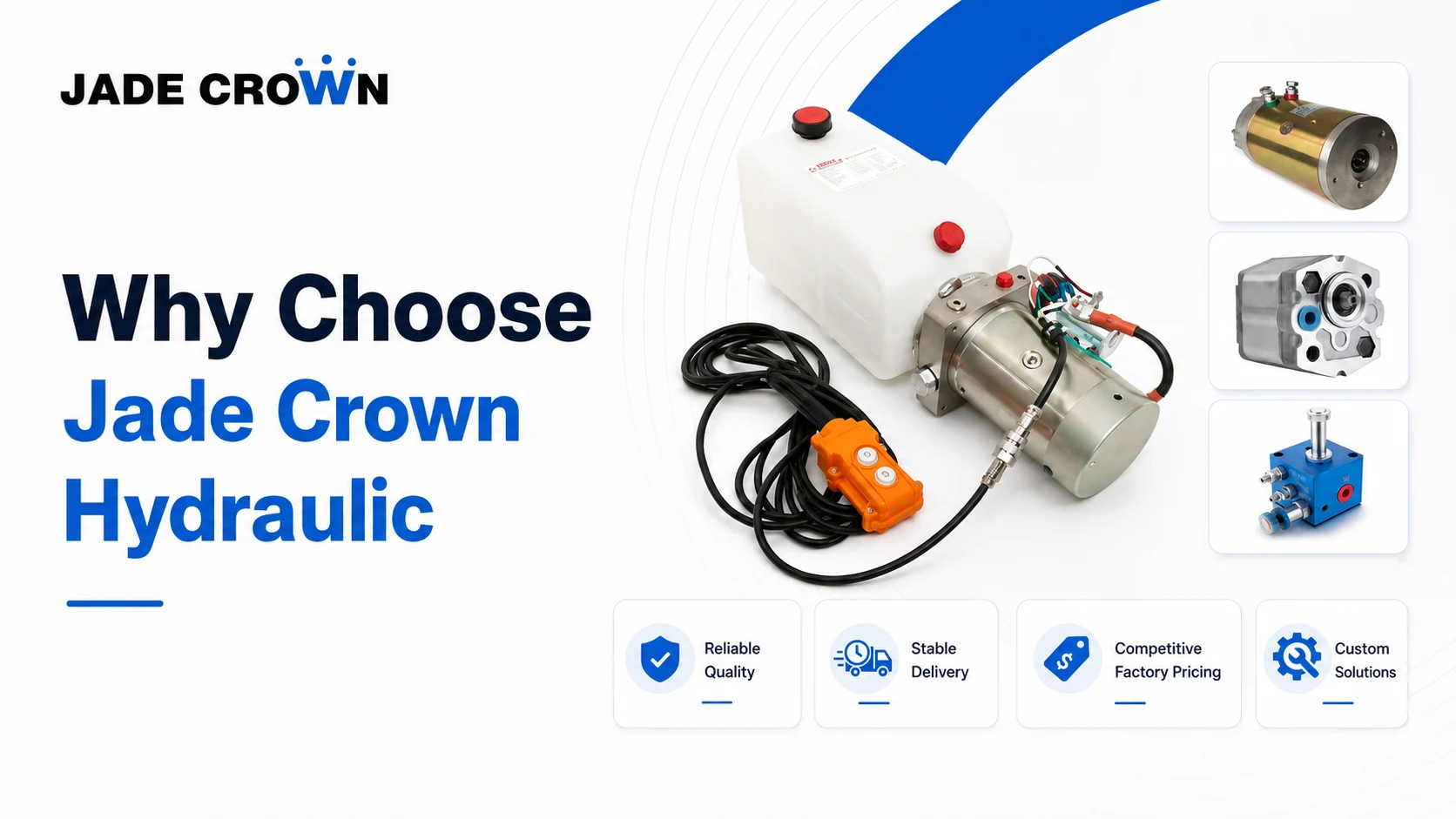
Jade Crown Hydraulic is a professional hydraulic power unit manufacturer providing standard and application-specific single-acting solutions. We match the power unit to the circuit, installation space, and operating conditions, helping you avoid unsuitable component choices.
- 1Professional hydraulic power unit manufacturing and configuration support
- 2Competitive factory-direct pricing
- 3Responsive production and delivery planning
- 4100% functional testing before shipment
For support with motor, pump, tank, port, and control selection, send us your application parameters for a technical recommendation.
Frequently Asked Questions
What is a single acting hydraulic pump?
A single acting hydraulic pump normally refers to a power unit for a single-acting cylinder. It supplies hydraulic power in one direction, while the cylinder returns through gravity, a spring, or another external force.
What is the difference between a single acting and double acting hydraulic pump?
A single-acting system powers one cylinder direction and relies on an external force for return. A double-acting system uses hydraulic pressure to extend and retract the cylinder.
What are three common types of hydraulic pumps?
Gear, vane, and piston pumps are three common hydraulic pump types. The right type depends on the required pressure, flow, efficiency, and application conditions.
What lead time and after-sales support do you provide?
Lead time depends on the model, configuration, order quantity, and production schedule. After the specification is confirmed, we will provide the applicable delivery plan, technical documentation, functional-test confirmation, and one year of after-sales support according to the agreed service terms.