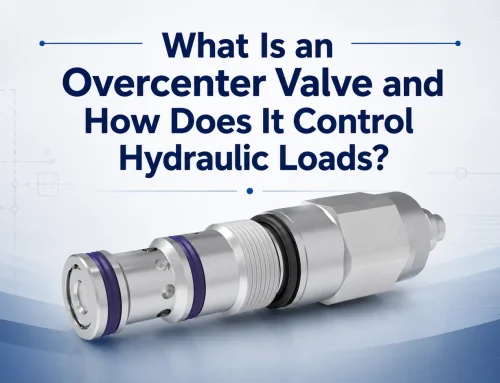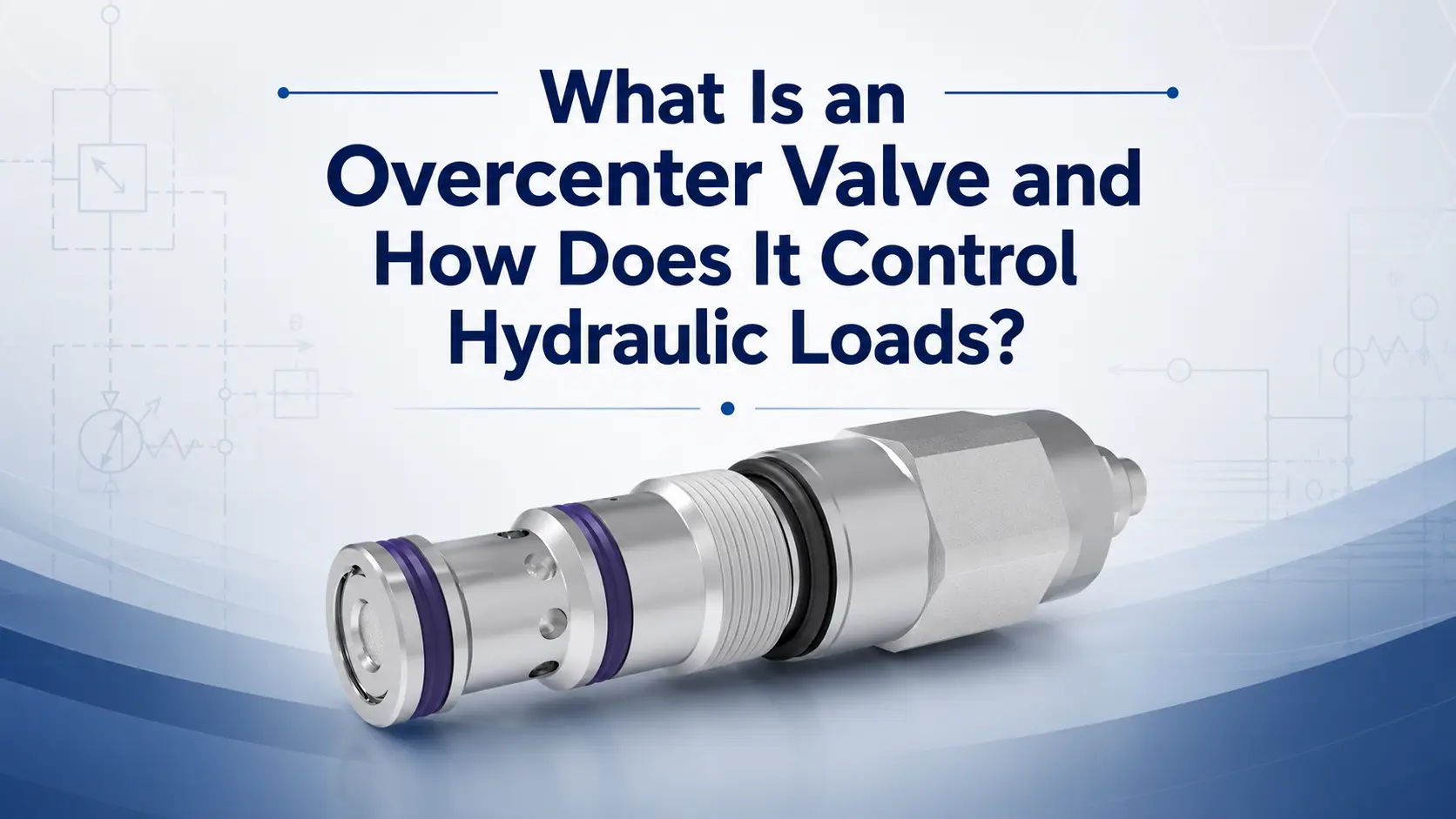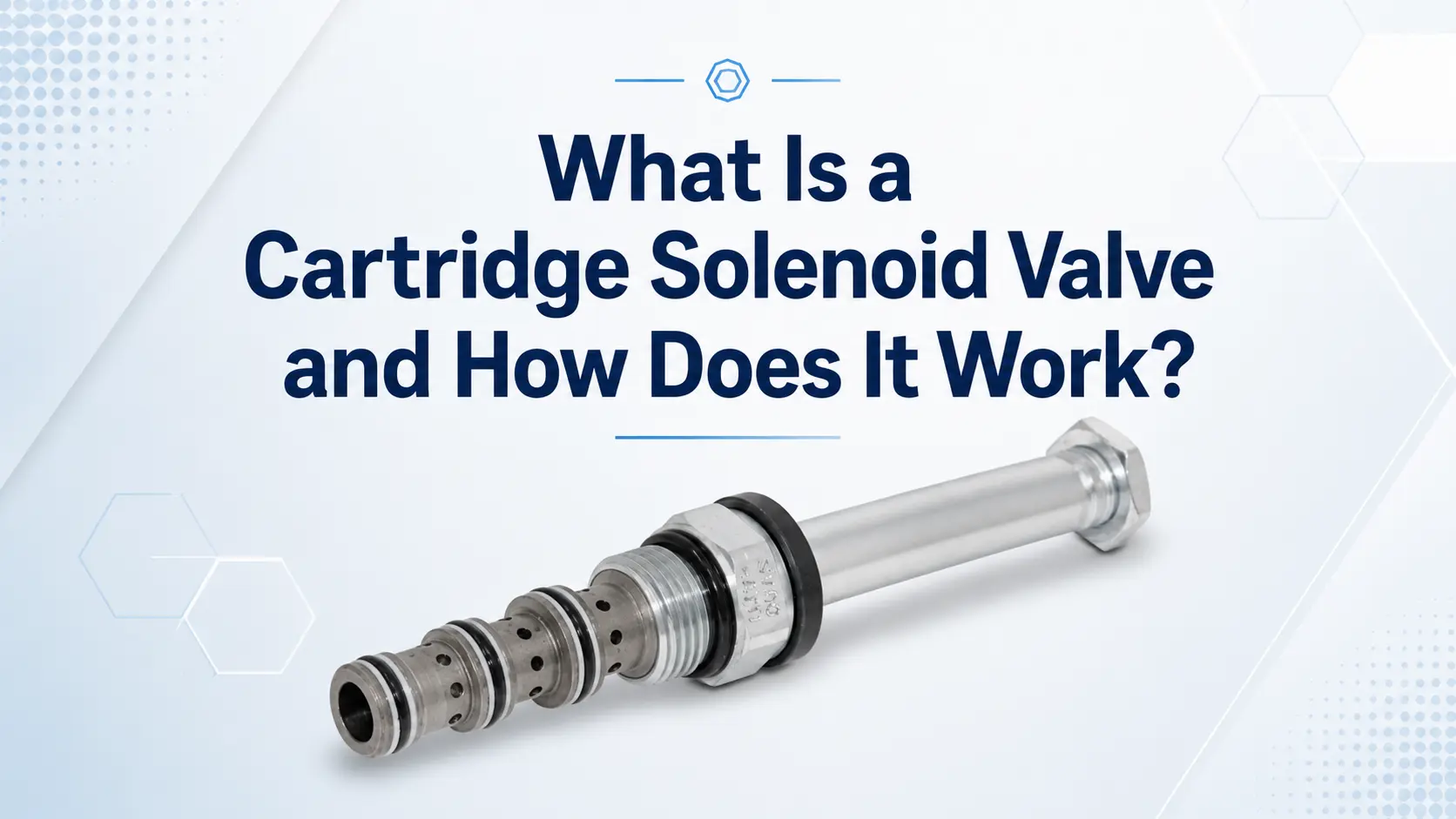
A cartridge solenoid valve is a screw-in hydraulic valve that uses an electromagnetic coil to control the movement of an internal poppet or spool, allowing hydraulic flow to start or stop inside a manifold system.
When the coil is energized, electromagnetic force is generated to move internal components. When de-energized, a spring returns the valve to its original position. This allows a cartridge solenoid (solenoid cartridge) to convert electrical signals into hydraulic flow control.
How Does a Solenoid Cartridge Valve Work?
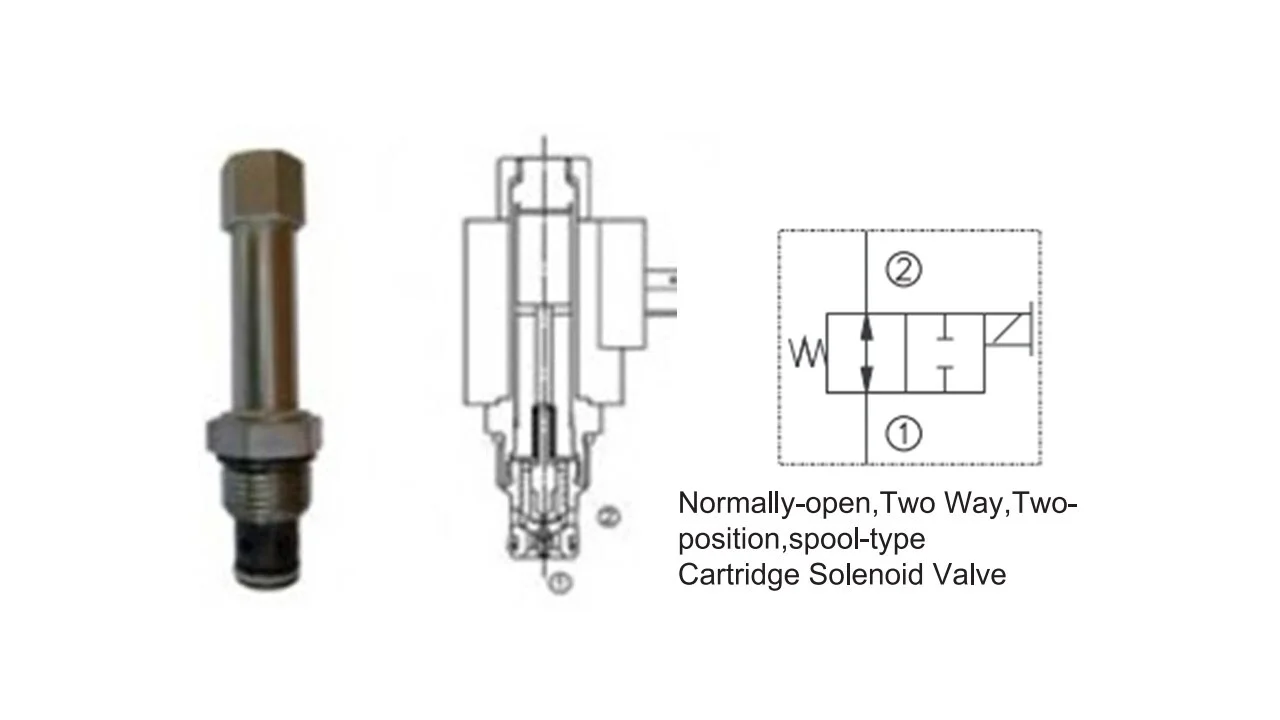
The operation of a cartridge solenoid valve follows a single continuous process:
Electrical signal → Magnetic field → Mechanical motion → Hydraulic flow change
Step 1 — Initial State (De-energized)
In the de-energized state, no current flows through the solenoid coil.
The spring holds the internal poppet or spool in its default position, defining whether the valve is normally open (NO) or normally closed (NC).
- 1
NC: flow blocked by default
- 2NO: flow open by default
- 3System remains hydraulically stable
Step 2 — Energized State (Actuation)
When current flows through the coil, it becomes an electromagnet. Magnetic force moves the armature, which shifts the poppet or spool.
- 1Poppet type: lifts off seat to open/close flow
- 2Spool type: slides to redirect flow paths
- 3Flow changes immediately
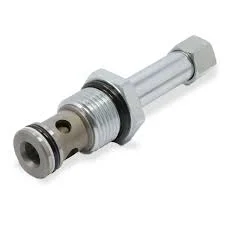
In direct acting cartridge solenoid valves, the coil directly overcomes spring and hydraulic force.
In pilot operated solenoid cartridge valves, a pilot flow creates pressure imbalance to move the main spool.
Step 3 — Reset State
When power is removed:
- 1
Magnetic field collapses
- 2
Spring pushes valve back
- 3Flow returns to default state
Need help selecting or integrating a cartridge solenoid valve into your hydraulic system? Contact our engineers for fast technical support and OEM solutions: Talk to our hydraulic valve specialists
What Are the Main Types of Cartridge Solenoid Valves?
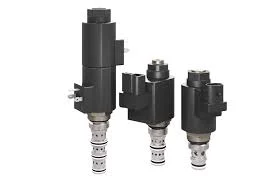
Cartridge solenoid valves are commonly classified by flow function, internal sealing structure, and actuation method. The main types include 2-way, 3-way, and 4-way configurations, as well as poppet-type and spool-type designs.
| Type | Main Function | Common Use |
|---|---|---|
| 2-way cartridge solenoid valve | Starts or stops hydraulic flow between two ports | On/off control, pressure holding, unloading circuits |
| 3-way cartridge solenoid valve | Switches flow between three ports | Pilot control, actuator direction control, hydraulic power units |
| 4-way cartridge solenoid valve | Controls flow direction between multiple ports | Cylinder extension/retraction and directional control |
| Poppet-type cartridge solenoid valve | Provides tight sealing and low leakage | Load holding and high-pressure circuits |
| Spool-type cartridge solenoid valve | Shifts flow paths by sliding the spool | Directional control and multi-port circuits |
Why Cartridge Solenoid Valves Are Used in Manifolds?
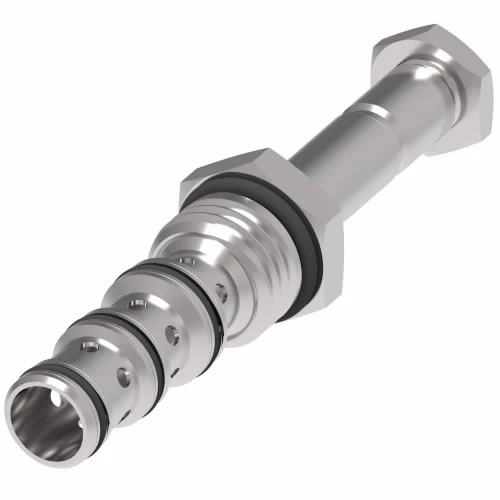
Cartridge solenoid valves are designed for direct installation into hydraulic manifolds, eliminating external piping and reducing system complexity.
The compact cartridge solenoid structure allows multiple valves to be integrated into one block while maintaining precise hydraulic control.
Where Are Cartridge Solenoid Valves Used?
- 1Industrial & Mobile Hydraulics: Commonly used in construction and agricultural equipment to direct hydraulic fluid to motors and cylinders.
- 2Load Holding: Ideal for retaining pressure in lifting systems, cranes, and presses.
- 3Compact Manifolds: Screws directly into custom manifold blocks to save space compared to traditional, bulky inline valves.
Why Choose Jade Crown as Your Cartridge Solenoid Valve Manufacturer?
Jade Crown is a professional manufacturer of cartridge solenoid valves and hydraulic cartridge components, focusing on stable performance and industrial reliability.
- Strict quality control across production
- Stable delivery time for standard and customized orders
- 1-year warranty on all cartridge solenoid valve products
- Competitive pricing for OEM and bulk purchasing
- Support for small batch orders and large-scale production
Contact our professional team via cartridge solenoid valve solutions consultation for technical support and quotation.
FAQ
What is the function of a cartridge solenoid valve?
It converts electrical signals into mechanical motion to control hydraulic flow inside a manifold system.
How long is the delivery time for cartridge solenoid valves?
Standard models usually ship within 7–15 days. Customized cartridge solenoid valve orders depend on specifications and quantity.
Do you provide warranty for solenoid cartridge products?
Yes, all cartridge solenoid valve products come with a 1-year warranty covering manufacturing defects.
What is the difference between direct acting and pilot operated valves?
Direct acting valves are driven directly by electromagnetic force, while pilot operated valves use hydraulic pressure differences to move the main spool.
Can cartridge solenoid valves be used in high-pressure systems?
Yes, depending on design type. Pilot operated cartridge solenoid valves are especially suitable for higher pressure and flow conditions.